


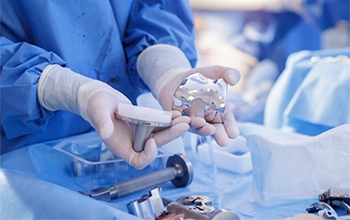
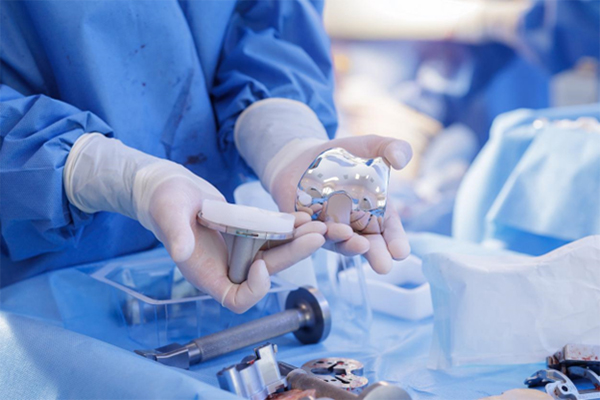
If you're considering a hip or knee replacement, one of the biggest questions is: How long will it last? The good news is that modern joint implants are designed to last far longer than many people expect. Advances in materials, surgical precision, and patient care have dramatically improved outcomes. Here's what patients should know about implant longevity today.
The Evolution of Materials: Beyond the 20-Year Mark
The lifespan of a hip or knee replacement has extended significantly due to breakthroughs in material science. In decades past, the primary concern was the wear of the polyethylene (plastic) liner, which could shed microscopic debris and lead to bone loss.
Today, surgeons utilize highly cross-linked polyethylene and advanced ceramics that are incredibly resistant to friction. Research studies suggest that approximately 90% to 95% of modern hip replacement and knee replacements are still functioning well at the 20-year mark.1 For many patients undergoing surgery in their 60s or 70s, a single well-performed procedure may very well last the rest of their lives.
The Role of Precision: Why Surgical Technique Matters
While the materials are world-class, the "mileage" an implant gets depends heavily on how it is installed. An implant that is even slightly misaligned will experience uneven weight distribution, much like a car tire that wears down prematurely due to poor alignment.
Modern orthopedic surgeons often employ robotic-assisted navigation and 3D preoperative planning to ensure the components are positioned with sub-millimeter accuracy. This precision ensures that the load is distributed across the entire surface of the implant, reducing edge loading and protecting the interface where the metal meets the bone.
Patient Factors: The "High-Mileage" Lifestyle
An implant is a mechanical tool, and like any tool, how it is used dictates how long it lasts. While patients are encouraged to return to an active lifestyle, certain activities place more "cycles" of stress on the joint than others.
- Impact Loading: High-impact sports like long-distance running or repetitive jumping can accelerate the loosening of the implant from the bone.
- Body Weight: Every pound of body weight can translate to three to six pounds of pressure across a hip or knee joint. Maintaining a healthy weight is arguably the single most impactful thing a patient can do to protect their investment.
- Activity Choice: Low-impact activities such as cycling, swimming, and hiking provide the cardiovascular benefits patients crave without the mechanical "pounding" that stresses the prosthetic.
Identifying the Signs of Wear
Even with the best technology, implants can eventually loosen or wear out, a process called aseptic loosening. Patients should be aware of "start-up" pain (discomfort when first standing up) or a new sense of instability in the joint.
Regular follow-up appointments, including periodic X-rays every few years, allow a surgeon to monitor the "bone-implant interface" long before physical symptoms appear. Early detection of wear often allows for a much simpler "liner swap" rather than a full, complex revision surgery.
The Bottom Line on Longevity
The goal of modern joint replacement isn't just to get a patient through the next decade; it is to provide a permanent solution for a life without limits. By combining advanced materials, robotic precision, and mindful post-operative activity, patients can expect their new joints to stand the test of time.
Frequently Asked Questions
1. Can I still run or play sports with a joint implant?
Most patients return to low-impact sports like golf, doubles tennis, cycling, and swimming without issue. While high-impact activities like long-distance running are technically possible, they can increase the rate of mechanical wear. It is best to discuss your specific athletic goals with your surgeon.
2. What does it feel like when a joint implant starts to wear out?
Early wear is often silent, which is why regular follow-up X-rays are vital. However, physical "red flags" can include a new onset of aching pain after activity, a feeling of instability or "giving way," or discomfort when first getting out of a chair.
3. Does my weight affect how long the implant will last?
Yes. Excess body weight increases the mechanical load on the implant's bearing surfaces and the interface where the prosthetic meets the bone. Maintaining a healthy weight is one of the most effective ways to reduce friction and extend the life of the joint.
4. What happens if an implant fails?
If an implant becomes loose or the components wear down, a revision surgery may be necessary. This involves replacing the old components with new ones. Modern revision techniques are highly successful, but the goal of preservation is always to make the first replacement the only one you ever need.
Reference Links:
- 20-Year Minimum Outcomes and Survival Rate of High-Flexion Versus Standard Total Knee Arthroplasty - PubMed
- How long does a knee replacement last? A systematic review and meta-analysis of case series and national registry reports with more than 15 years of follow-up - PubMed Central
AUTHOR: Dr. Nicholas B. Frisch, MD, MBA, FAAOS - Orthopedic Hip & Knee Surgeon
Nicholas B. Frisch, MD, MBA, FAAOS is a board-certified orthopedic surgeon specializing in hip and knee replacement, minimally invasive joint replacement, and complex primary and revision arthroplasty. He practices at Center for Advanced Orthopedics and Sports Medicine in Auburn Hills, Michigan, and serves as Chief of the Department of Surgery at Henry Ford Rochester Hospital.
Credentials & Recognition
Dr. Frisch earned his undergraduate degree from the University of Vermont, his Master's in Medical Science from Loyola University Chicago, and his MD and MBA in Healthcare Management from Tufts University School of Medicine. He received the Norman S. Stern MD|MBA Award for excellence in academics and leadership. Dr. Frisch completed his orthopedic surgery residency at Henry Ford Hospital in Detroit, where he received the 2016 Outstanding Resident Award, and his adult reconstruction fellowship at Rush University Medical Center in Chicago. He is a Fellow of the American Academy of Orthopaedic Surgeons (AAOS) and serves as Health Policy Fellow and Vice Chair of the Young Arthroplasty Group for the American Association of Hip and Knee Surgeons (AAHKS). Dr. Frisch has been recognized as a Top Doctor in Metro Detroit by Hour Detroit and DBusiness magazines from 2022 to present.
Clinical Expertise
Dr. Frisch specializes in minimally invasive hip replacement using anterior and mini-posterior approaches, robotic knee replacement, and outpatient joint replacement procedures. He has published numerous peer-reviewed research articles in leading orthopedic journals including The Journal of Arthroplasty, Arthroscopy Today, and Journal of Surgical Orthopaedic Advances. Dr. Frisch received the 2022 John N. Insall Award from The Knee Society, the 2018 Orthopedics Blue Ribbon Article Award, the 2017 Best Poster in Musculoskeletal Oncology Award at the American Academy of Orthopaedic Surgeons Annual Meeting, and the 2016 Orthopedics Best Clinical Article Award. He serves as Clinical Champion for the Michigan Arthroplasty Registry Collaborative Quality Initiative (MARCQI). Dr. Frisch utilizes efficient pain management pathways and innovative technology to enable rapid recovery and faster return to normal activity for his patients.
Medical Disclaimer: This information is for educational purposes only and does not constitute medical advice. For diagnosis and treatment recommendations, please consult with Dr. Frisch or another qualified orthopedic specialist at FrischOrtho.


